
Waymo Opens Ojai Robotaxi to All Riders in 3 US Cities
August 19, 2026
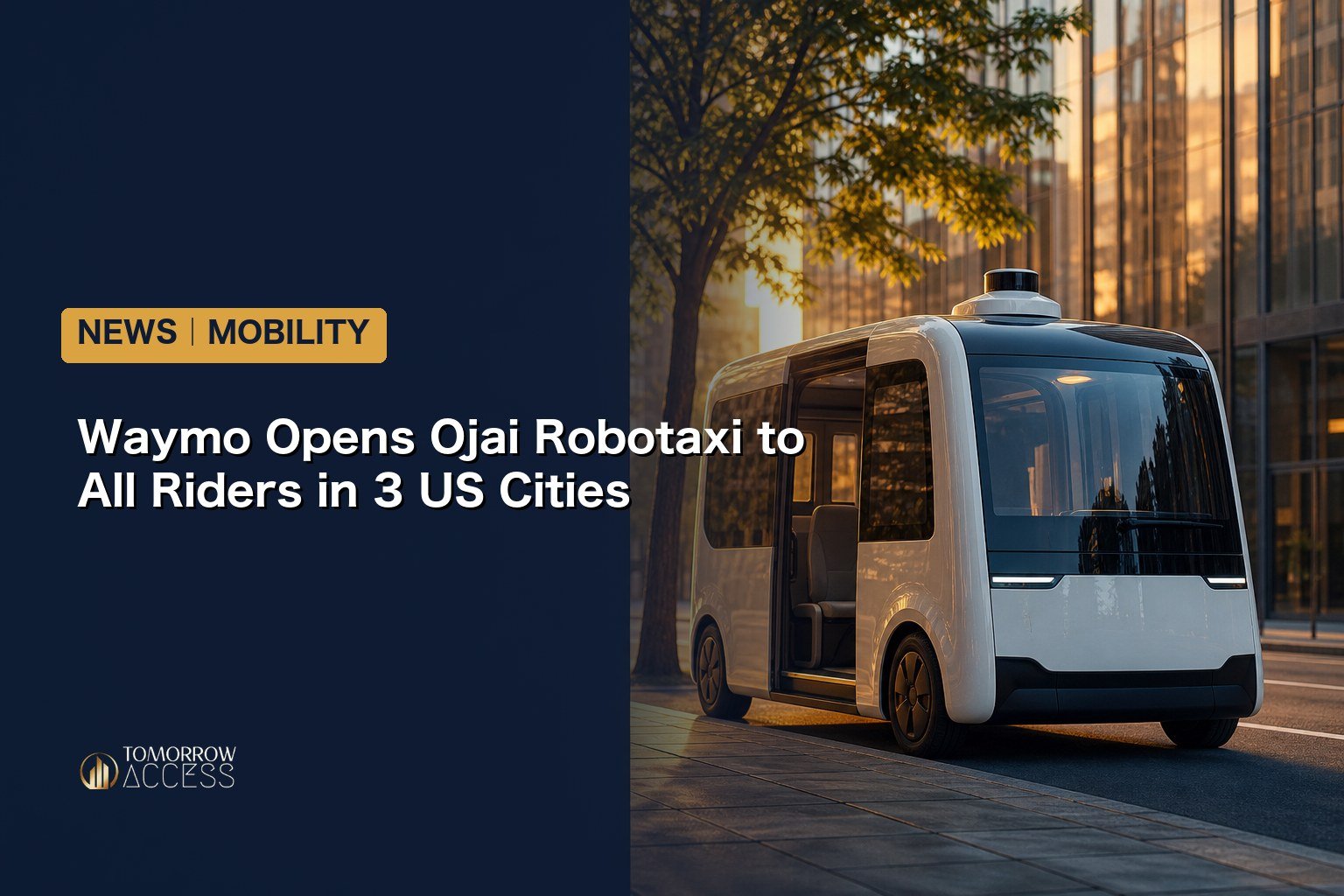
All riders in Los Angeles, Phoenix, and San Francisco can now be matched with the Ojai, Waymo’s next-generation robotaxi, the company announced on August 19.
Tomorrow Access is based in the San Francisco Bay Area, and even before this launch, we had occasionally spotted Ojai test vehicles driving around with a person still in the driver’s seat. The new vehicle we had been seeing on local streets is now open for anyone to ride.
The Ojai is designed as a lower-cost platform that can support Waymo’s expansion across more markets.
For Waymo, the broader significance is the ability to add vehicles at lower cost as its autonomous ride-hailing network expands nationwide.
Ojai Rides Are Now Open to Everyone in Three Cities
Riders in the three cities may find an Ojai assigned to their trip when they request a ride. A vehicle-choice option between the Ojai and the Jaguar I-Pace is planned once enough of the new vehicles are on the road.
According to TechCrunch, a company spokesperson said about 300 Ojai robotaxis are currently in Waymo’s commercial fleet. Denver, Las Vegas, and San Diego are next in line for the vehicle later this year.
Waymo announced plans for the public rollout on May 28, 2026, and welcomed its first riders on June 10, initially offering some rides free to a subset of riders in the three cities as it gradually expanded access.
The Sixth-Generation Driver and a Handover from the Jaguar Fleet
Waymo has long relied on modified Jaguar I-Pace electric SUVs as the mainstay of its robotaxi fleet. The company now operates across 11 U.S. cities.
The Ojai is the first vehicle to debut the sixth-generation Waymo Driver, a modular system the company designed to run on multiple vehicle platforms. Riders also get a redesigned user interface and Google’s Gemini AI as an in-car assistant.
Inside Waymo’s Plan to Mass-Produce a Cheaper Robotaxi
The Ojai’s body is a minivan from Zeekr, an EV brand under China’s Geely Holding Group. Waymo and Zeekr have worked together since 2021 on the SEA-M platform, a base developed for robotaxis and delivery vans. The goal: a vehicle that is simple to board, inexpensive to produce, and durable enough for continuous commercial duty.
Waymo says its factory in Mesa, Arizona, is scaling toward production capacity of tens of thousands of units per year. According to TechCrunch, the base vehicles ship without Chinese connected-car technology and are fitted with the self-driving system at Waymo’s Arizona factory.
Tariffs remain a cost headwind: because the vehicles are built in China, each imported Ojai is subject to steep U.S. import duties under current trade policy, TechCrunch reports.
TechCrunch also reports that research firm MoffettNathanson, which tracks detailed records of shipped goods, estimates Waymo is on pace to import 5,000 Ojai vehicles by the end of 2026 — a volume that, according to the firm, would more than double the current Jaguar fleet. The firm puts July 2026 imports alone at 725 vehicles.
Purpose-built vehicles are becoming central to the U.S. robotaxi race: Zoox recently won the first federal exemption for a commercial passenger-carrying autonomous vehicle.
Ojai vs. Jaguar I-Pace at a Glance
Here is how the two vehicles compare.
| Category | Ojai (new) | Jaguar I-Pace (current) |
|---|---|---|
| Vehicle type | Electric minivan built by Zeekr | Modified Jaguar electric SUV |
| Manufacturing | Body built by China’s Zeekr, with the self-driving system installed at Waymo’s Arizona factory | Production I-Pace retrofitted by Waymo |
| Self-driving system | First vehicle with the sixth-generation Waymo Driver | Earlier-generation Waymo Driver |
| In-car experience | Redesigned user interface and Google’s Gemini AI assistant | Previous user interface |
| Role | Lower-cost platform positioned as the next-generation workhorse | Longtime mainstay of the fleet |
| Availability | Open to all riders in Los Angeles, Phoenix, and San Francisco (about 300 vehicles) | In service as the mainstay of Waymo’s existing fleet |
What to Watch Next
Waymo has not said when riders will be able to choose between the Ojai and the Jaguar I-Pace, and the Denver, Las Vegas, and San Diego rollouts are only slated for later this year.
How tariffs affect unit costs — and whether the estimated 5,000-vehicle pace holds — will show how quickly Waymo can scale its cheaper fleet.
Sources
Waymo – Same Driver, new vehicle: Welcoming our first rider trips in the Ojai
Waymo – Say hi to new Ojai in-car experience
TechCrunch – Waymo’s cheaper, next-gen robotaxi is now open to all riders in these three cities