Mobileye Plans to Run Its Own US Robotaxi Service in 2027
June 16, 2026
Mobileye has long sold autonomous-driving technology to automakers. Now it wants to operate the service itself.
Mobileye, which is listed on the Nasdaq and majority-owned by Intel, said on June 16 that it plans to launch a robotaxi service in a major US metropolitan market in 2027, a move that could create overlap with some of the carmakers and mobility operators it supplies and give Mobileye a dual role as both supplier and operator of self-driving services.
What Mobileye Announced
Mobileye said it plans to phase in an initial fleet of about 100 autonomous vehicles in a major US metropolitan market throughout 2027. If the rollout succeeds, the company plans to scale to roughly 17,000 robotaxis over the following five years.
Mobileye will set up a new operating business for the service, using its in-house self-driving system, Mobileye Drive, for the vehicles and Moovit, the transit and ride-hailing app it owns, for the consumer-facing part of the service. Moovit serves more than 1.7 billion users across more than 3,500 cities in 112 countries.
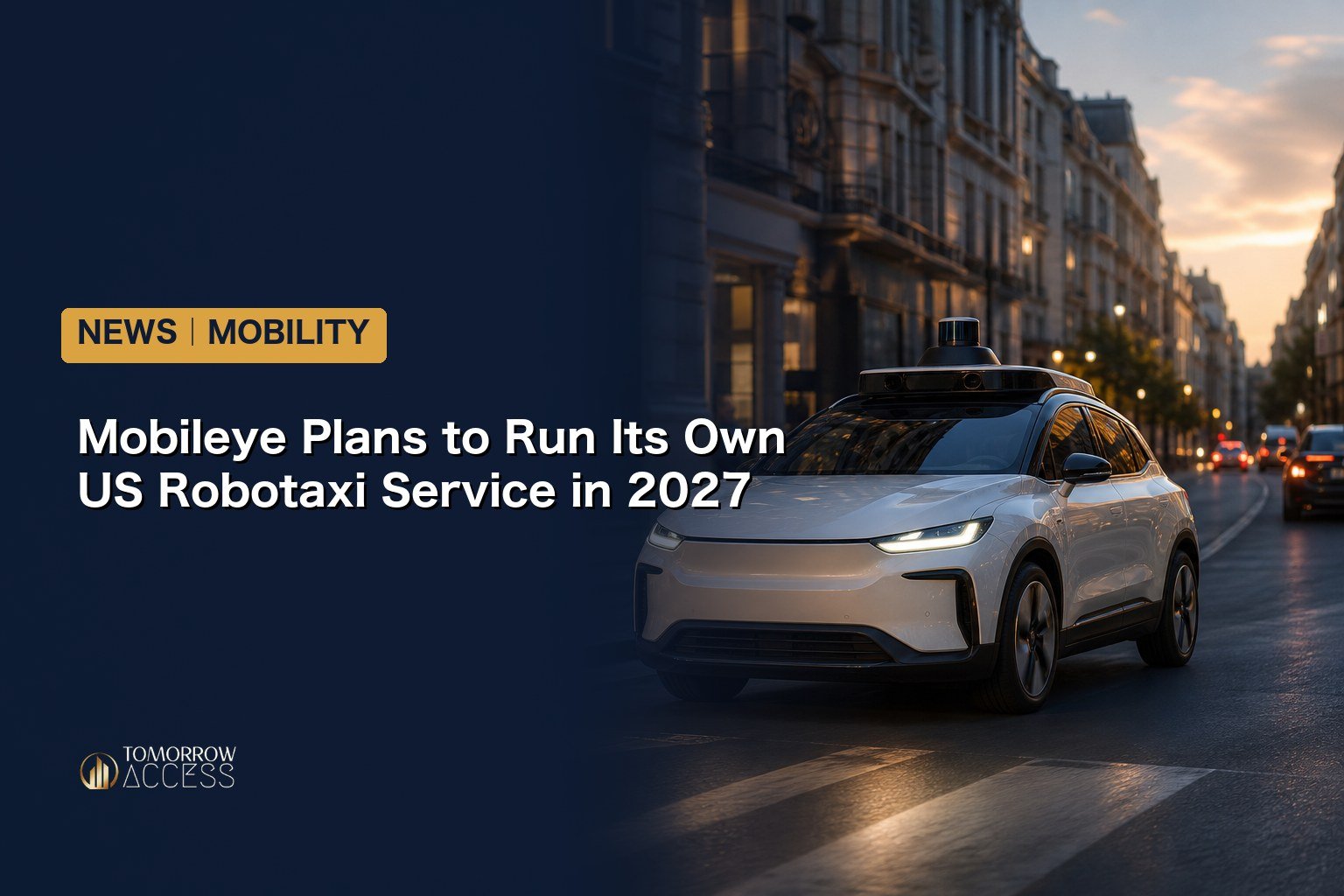
The company did not name the vehicle, saying only that it will work with “AV-ready vehicle platform manufacturers.” TechCrunch noted that the vehicle in Mobileye’s illustration, which the company describes as a photo illustration, resembles a modified Ora iQ, an electric crossover made by China’s Great Wall Motors.
Why Mobileye Is Moving From Supplier to Operator
Mobileye built its business supplying automakers with computer-vision chips for safety features and advanced driver-assistance systems (ADAS); the company says more than 230 million vehicles worldwide had been built with its EyeQ technology through 2025.
It later developed chips and software for full autonomy and now supplies its self-driving system to Volkswagen and its MOIA subsidiary. Running its own service could put Mobileye in competition with some of its customers and partners.
Founder and CEO Amnon Shashua hinted at this path years ago: in a 2020 interview with TechCrunch, he said the “Holy Grail” was passenger-car autonomy, but added that “you can’t reach that Holy Grail if you don’t go through the robotaxi business.” The new venture puts that view into action.
Dependence on a Few Technology Providers
Shashua said the autonomous-driving industry has grown increasingly dependent on a small number of technology providers and business models. He framed the robotaxi push as a complement rather than a substitute: “This initiative is not a replacement for our existing partnerships; it is an extension of them,” he said, stressing that Mobileye remains committed to supplying automakers with Mobileye Drive.
Still, running its own fleet could blur the line between partner and competitor in some markets. Mobileye argues that running the service will let it accelerate adoption, gain direct operational experience, and showcase what its technology can do, a both-sides strategy whose success in a competitive robotaxi market remains to be seen.
What to Watch Next
Mobileye has not named the launch city or the vehicle it will use, and it describes the 100-vehicle rollout only as phased throughout 2027.
How it manages competition with some of the customers it supplies, and whether it can scale toward 17,000 vehicles as planned, are open questions.
The first city, the chosen vehicle, and a concrete launch date will be the clearest signs of how real the plan is.
Sources
Mobileye – Mobileye to Establish Vertically Integrated Robotaxi Business
CNBC – Self-driving tech supplier Mobileye targets U.S. robotaxi launch in 2027
TechCrunch – Mobileye’s US robotaxi launch will put it on both sides of the AV business
The Next Web – Mobileye to launch its own US robotaxi service in 2027